
4 Micro-Moments of Mindfulness to Create Calm in Your Day in Minutes
Inside: Discover four ways to create micro-moments of mindfulness during even your busiest days.
A guest post by Rose Morrison
Life moves quickly.
From the moment you wake up, your mind can already feel full as you think about what needs to get done, what you might be forgetting, and everything waiting for your attention. Even on slower days, it’s easy to move from one task to the next without ever really pausing.
Over time, that constant motion can leave you feeling scattered, drained, and disconnected from the present moment.
But creating a sense of calm doesn’t always require carving out large blocks of time or completely changing your routine.
Sometimes, it’s found in the smallest moments. Taking deep breaths, pausing between tasks, and allowing for stillness during the lulls in the day can help you recenter yourself.
These small pauses, these micro-moments of mindfulness, can gently bring you back to the present and help reset your mind, even in the middle of a busy day.
In this post, we’ll explore five simple micro-moments you can weave into your daily routine to create more calm, clarity, and intention without adding anything extra to your schedule.

Why Mindfulness Practices Work
Clutter is not always piles and bags. Sometimes it’s a countertop that never fully clears, or a chair that becomes a holding zone for everyone’s “I’ll deal with it later” items.
Micro-moments work because they interrupt autopilot. You’re not waiting for a perfect Saturday to do a full reset.
You’re using ordinary triggers, walking into the kitchen, opening your closet, or sitting down at your desk to create a tiny pocket of awareness. Fifteen seconds here and there sound small, but they add up fast, revealing where your attention leaks and where your space nudges you into stress.
Once you see the pattern, you can simplify it. A calmer room is easier to maintain, and a calmer mind makes decisions more quickly.

Visual Noise Pulling Focus
When your space is visually cluttered, your brain keeps scanning and changes the way information reaches your brain, even if you think you’re used to it.
That scanning costs you energy, and it makes basic tasks feel heavier than they should. Physical clutter can compete for your attention, which can make focusing harder and even makes 55% of Americans feel stressed.
To quickly spot visual noise in your home, stand in your kitchen and pick one spot, such as the counter near the kettle. Notice if your eyes land on five different objects in two seconds. If yes, you’re dealing with visual noise.
If you can’t even find a place to put something down, you might be clutter blind to some degree.

Tiny Pauses Beat Big Overhauls
Big decluttering plans sound motivating until you’re tired. Then they turn into guilt.
Living in the moment is different because they’re doable in real life. You’re working with the day you already have.
The average person spends about 2.5 days a year looking for lost items. That’s friction built into the environment.
Tiny pauses chip away at that friction. Stop, notice, and move one thing back to where it belongs.

The Stop, Look, Feel, and Appreciate Protocol
Mindful micro-moments ask you to stop, look, feel, and appreciate. This is the core practice you’ll use for mindfulness techniques that actually fit inside your day.
It takes about 15 to 30 seconds. You can do it while making coffee, folding laundry, answering a text, or wiping down the counter.
Implementing these mindful micro-moments can help calm your body and mind and support your progress with decluttering as well.
Stop — Pause Intentionally
A trigger is anything that naturally happens. The kettle clicks off, you enter a room, you open the fridge, or you notice a mess. Instead of pushing through to the next task, you pause on purpose.
This is where living in the moment gets real because you’re not meditating in a quiet corner. You’re standing in your kitchen with a to-do list in your head. Stop anyway. Take deep breaths to calm your body and your mind.
Look — Engage Your Senses
Properly observe specific details in the kitchen. Notice the shine on the tap, the crumb trail by the toaster, and the stack of mail that keeps multiplying.
Next, incorporate all of your senses. Hear the hum of the fridge, smell last night’s dinner lingering, and feel the cool counter under your palm. This is how mindful moments start feeling grounded.
If you’re decluttering, this stage is where you spot what feels off, such as the corner that makes you sigh or the drawer you avoid. Make a note of what you’re observing as you plan which areas to tackle next.

Feel — Acknowledge Your Emotions
Name what you feel in simple language. You might feel overwhelmed, tired, or calm. Let yourself feel this emotion instead of ignoring it.
This stage is also beneficial for streamlining relationships. If the mess makes you resentful or snappy, that’s a signal.
You don’t have to act on it in the moment. Instead, you just acknowledge it.
Emotional clarity also makes decluttering decisions cleaner. When you can clearly identify your attachment to an item, you can work through it to let it go.
Appreciate — Cultivate Gratitude
Shift into appreciation. Notice one thing that is working, like the fact that you have food to cook, a warm mug, clean water, or a home that holds your life.
Make a habit of gratitude in your life and write down a few things you’re thankful for each day.
Then pick one small step to improve your space. Put three items away, toss the broken pen, wipe the sticky spot, or start a donation bag. All you need is one action.

When Things Go Wrong
The protocol may help build emotional resilience. You’ll be able to fix the problem with less heat and spiraling.
This may sound like a silly example, but imagine you spill some oil on your counter while making dinner. When the liquid hits the surface, stop for five seconds (as long as it’s not continuing to spill over to other areas).
Then, look at the situation and take the opportunity to have a mindful moment. See the actual size of the spill and realize that it’s rarely as catastrophic as your brain claims.
Next, feel it. Identify whether you’re feeling annoyed, rushed, or frustrated, and soften your shoulders.
After that, appreciate the moment. Reframe the situation by acknowledging that it’s just a spill, nobody has been hurt, and you can easily clean it.
Clean with intention by blotting the spill with a dry cloth, and even if it leaves an oily residue, a bit of water and baking soda can lift remnants without the incident ruining your day or evening if you set aside any negative feelings associated with the minor accident.
Creating a gap to breathe between the spilling and your reaction to it can help you remain calm.

Why This Works for Being Present
This protocol connects inner calm to outer order through micro-moments of mindfulness. You don’t have to be serene all day, but you can catch the moments that usually pull you into stress before they happen.
This practice can help foster emotional resilience in other areas of your life, from minor messes to interpersonal conflicts.
Clutter often grows from postponed decisions, and mindful micro-moments help minimize those. Home clutter has been associated with reduced well-being, so decluttering is essential — a calmer space supports a calmer mind.
Being present can also help minimize mental clutter, such as breaking a loop of negative self-talk or helping you navigate decision paralysis.
Pause and Effect
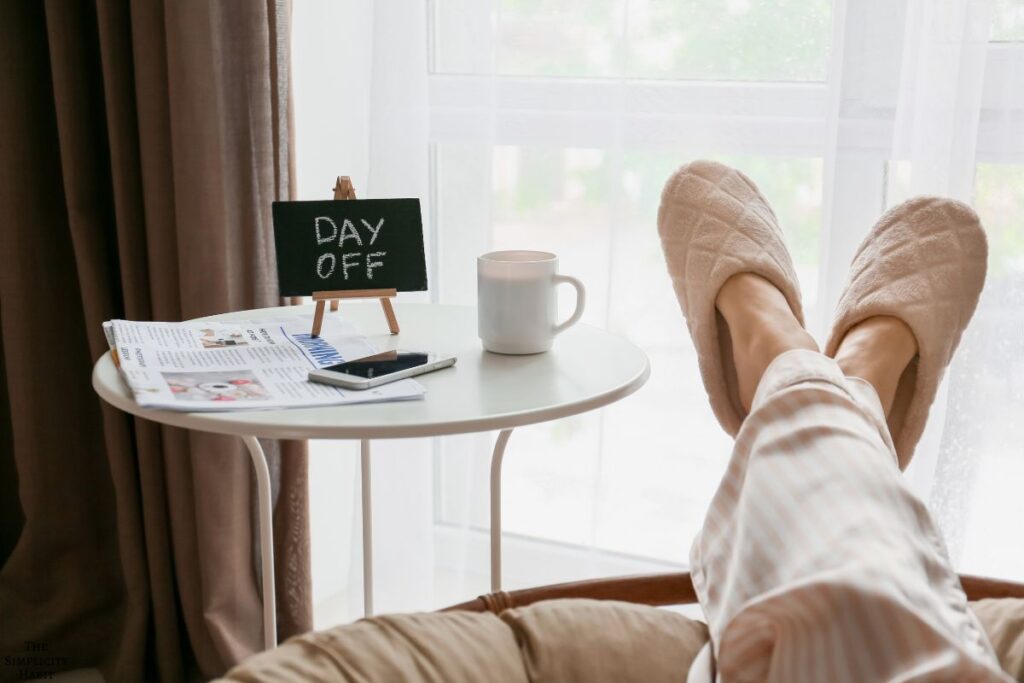
You can’t slow the whole world down, but you can calm one moment at a time. That one moment changes the next and so on. Pick one trigger today and implement micro-moments of mindfulness to give yourself a little more ease and grace.

What micro-moments of mindfulness will you practice today? Let us know in the comments section below.
Sign up on the form below to get weekly decluttering and simplifying inspiration sent straight to your inbox. You’ll also get the free 8 Quick Wins for Decluttering Worksheet to help you start to simplify your life today.

very practical article
At work, my voicemail picks up after 4 rings. I’m always rushing to answer the phone. I’ve just realized that I should extend this timing to 10 rings. Then, I will create a micro-moment to calm myself before answering. Thank you for helping me to acknowledge and reduce this unnecessary source of tension!
Thank you. Rose, for the reminder that a calming moment goes a long way with dealing with some overwhelming to-do lists.