Inside: Discover what the reverse decluttering method is and how you can use it to simplify your space this coming year.
A guest post by Evelyn Long
Most of us declutter the same way we’ve always been taught: we pull everything out, make piles, and ask ourselves—over and over—Should I keep this?
It works… eventually. But it’s also exhausting. By the end, we’re tired, overwhelmed, and often left wondering why simplifying our homes feels so hard.
What if the problem isn’t you—but the method?
As we step into a new year, there’s an opportunity to rethink how we approach our spaces. Not with more rules, bigger purges, or guilt about what we “should” own, but with a quieter, more intuitive approach that honors how we actually live.
This is where the “Reverse Decluttering” method comes in.
Instead of starting with what you want to get rid of, reverse decluttering begins with what truly supports your life right now. It shifts the focus from eliminating excess to intentionally choosing what stays and letting go of the excess.
The result is less decision fatigue and a home that feels lighter and calmer without the chaos of a full-scale cleanout.
In this post, I’ll walk you through four simple steps to practice reverse decluttering in 2026—steps designed to help you simplify your space in a way that feels realistic, compassionate, and sustainable.
Creating a home you love doesn’t have to be overwhelming. Sometimes, it just requires a different approach.
What Is the Reverse Decluttering Method?
Reverse decluttering is all about changing your mindset.
Instead of asking yourself, “What do I want to get rid of?” think, “What do I want to keep?” People are naturally inclined to assign sentimental value to items, forming meaningful relationships with possessions that may hold little significance for others.
Though this emotional connection may make it challenging to let go of everything, you can harness its pull to allow yourself to focus on items that truly mean the most to you.
How to Use the Reverse Decluttering Method in Your Home
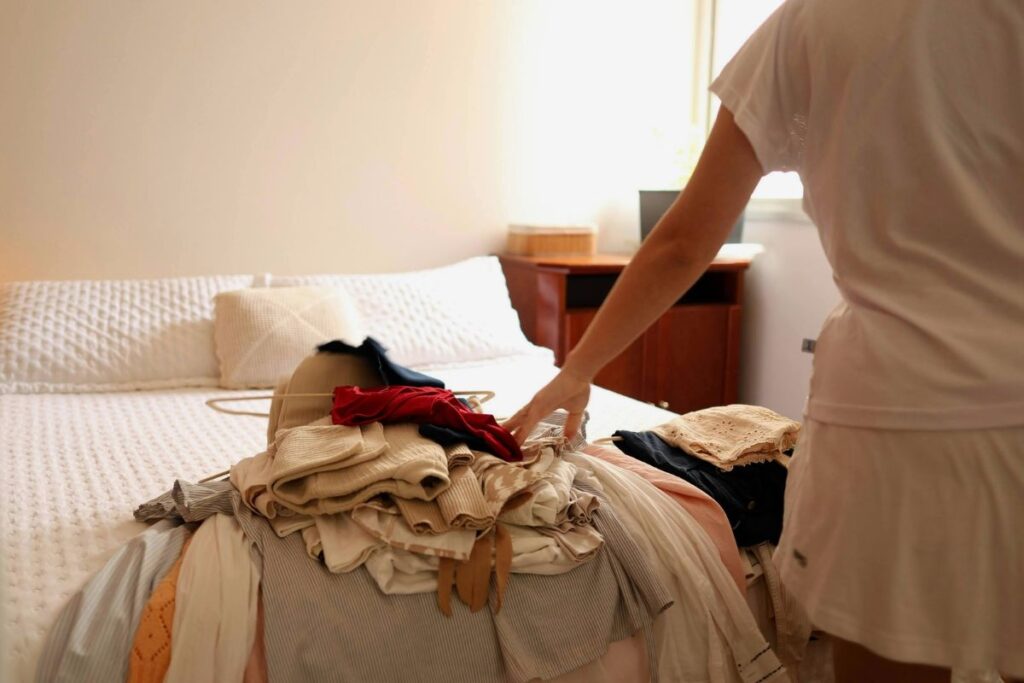
Implementing this philosophy requires a hands-on approach. The following steps will guide you through the physical process of emptying, evaluating, and intentionally curating your space one area at a time.

1. Shift Your Mindset
Consider the mugs in your cupboard. Examine how many of them came from a dishware set, how many were gifts, and how many you purchased as a souvenir.
What value do they bring, and how often do they realistically get used?
Now, imagine someone tells you to get rid of every last one of them. Which would be the hardest to part with? Allow yourself to keep those.
By shifting your mindset with decluttering, you may rediscover the value of the more sentimental items, allowing you to appreciate them even more.
2. Try the House Hushing Approach
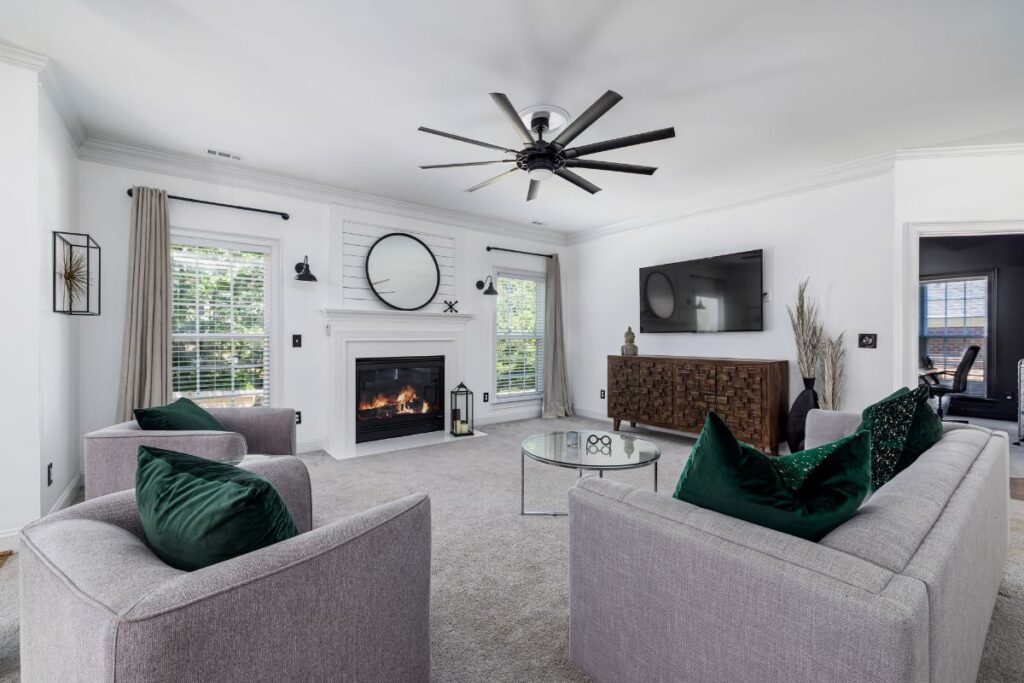
The house-hushing method encourages you to test living with less. Empty an entire shelf, box, or corner of your home, then repopulate it only with items you deem essential, use frequently, or genuinely cherish.
If you are not quite ready to part with the nonessentials that didn’t make it back to the space, you can box up the remainders and store them out of sight for a set period. By keeping them stored, you can get used to the space without them.
Given time and separation, these items may not be as sentimental after the designated cool-off period.
It’s essential to establish a clear limit for the duration you keep boxed items. Try no more than 30 days before revisiting the box and assessing if you truly missed any of the items.
This way, you can prevent a buildup of storage boxes that merely relocate the clutter.

3. Go Room-By-Room
Stacked boxes of decorations, storage, or would-be donations can contribute to clutter, even in spaces you don’t use often, such as garages, attics, or basements. While these spaces might be out of sight and out of mind, it’s essential to keep them clear.
Rodents, insects, and other pests are drawn to clutter because it gives them places to hide and nest. To prevent pests, keep these spaces clean by applying reverse decluttering techniques to each room.
Remember to set those hard limits for yourself on how long to keep stored items to prevent buildup.
Apply this approach in each room of your home. You can also apply reverse decluttering to your wardrobe by ruthlessly decluttering clothing and keeping only pieces that you wear often and feel comfortable in.
Try to limit “just in case” and “someday” items, or consider other ways to reuse damaged clothing by transforming them into dish rags or tablecloths. If you’re hesitant to part with older clothes that have sentimental value but no longer fit, such as childhood camp shirts or uniforms, try stitching them into a blanket.

4. Think One In, One Out
To set yourself up for long-term success, you can apply the “one in, one out” rule. You’ll naturally continue accumulating things as time passes, so to keep clutter from accumulating, let go of an item for every new one you get.
This mindset is particularly useful and intuitive when replacing broken items, as you can simply toss the old one to make room. However, it can be more challenging for certain things, like gifts.
To apply this principle and promote mindful consumption for yourself and those around you, consider asking for consumable gifts or new versions of everyday items, allowing you to sell or donate the older versions that no longer serve their purpose.
Actively practicing this method can keep clutter under control in the long run. It also helps reinforce the value of the items you already have, making the principles of reverse decluttering stick.

Benefits of a Simpler Space for a Happier Home
Even for people who prefer maximalism, decluttering is an important part of maintaining a happy and healthy home. Studies note that 55% of Americans consider clutter a major source of stress.
Conversely, cleaning and decluttering are linked to increased focus and lower cortisol levels, as well as lower risks of asthma and allergies.
For busy families, decluttering may feel like a massive undertaking. Traditional downsizing, which focuses on discarding things, may be challenging for anyone with especially cherished items or those attached to particular memories.
Using the reverse decluttering method allows you to focus on keeping what’s important, which helps break decluttering up into manageable tasks that the whole family can participate in.

Overcoming Obstacles With the Reverse Decluttering Method
A common pitfall of prioritizing sentimental items is assigning value to everything, leaving you with nothing to discard. It can be challenging to overcome feelings of guilt, especially when it comes to childhood objects and gifts.
Consider these actionable tips to help break the cycle of sentimentality.
1. Prioritize the Memory Over the Object
Some items attached to a strong memory may no longer serve an essential purpose in your home, like a childhood drawing or a movie ticket.
It’s okay to let go of the physical item if you still cherish the memory attached to it. Consider taking a picture or writing down the memory to help hold on to it.
2. Put a Price on “Just In Case” Items
Sometimes, holding on to things you think you might need in an unprecedented or unlikely situation just leads to clutter and even increased stress in anticipation.
Consider the estimated cost of these items and apply the 20/20 rule — if you can replace a “just in case” item for under $20 in under 20 minutes, then it is likely safe to discard. Be forwarned though, the $20 rule can encourage you to declutter too much, so use it with caution.

3. Regift or Repurpose Valuable Gifts
What should one do with unwanted gifts? Gifts are often the hardest to let go of, mainly due to feelings of guilt. However, if an item is not serving you, it might just be taking up space.
Consider regifting it to someone you know will appreciate it. You can also repurpose the item elsewhere in your home, such as using a coffee mug as a pencil holder or repurposing a decorative bowl as a succulent planter.
Start Fresh With Less
Decluttering is an essential way to keep your home feeling clean and relaxing. Where traditional decluttering methods may take a substantial emotional toll, reverse decluttering helps you reprioritize what holds the most meaning for you.
By focusing on what you’re choosing to keep, the entire process becomes a joyful act of curation.

Evelyn Long is a home organization writer who helps homeowners and renters maintain a neat space through innovative decluttering tips. She has written for several other publications, including the National Association of Realtors and DecorMatters. She is also the editor-in-chief of Renovated Magazine, where she shares additional tips on decluttering and home organization.
What do you think of the reverse decluttering method? Let us know in the comments section below.
Sign up on the form below to get weekly decluttering tips and inspiration sent straight to your inbox. You’ll also get the free 5 Areas to Declutter in 10 Minutes Checklist to help you get started decluttering today.

This is the heart of Konmari — don’t decide what to toss, decide what to KEEP, and only keep things you love, use, and need. Really, that’s it. Kondo’s “spark joy” has been widely misunderstood to mean you must be maniacally happy over every single thing, but that’s not true. For something like a toothbrush, keep one that serves your needs and is perhaps a color you love. You don’t have to go into ecstasies every time you use it.
I was never able to truly declutter until I tried Kondo’s method, which also includes going category by category, not room by room. When I’d do the room by room way, I’d just churn things from one room to another. When I went by category, I could truly see how much of X thing I owned and mostly didn’t need or want. Happy 2026 to everyone!
Yes, th is like Marie Kondo’s method. I agree with the comment. Doing the decluttering by groups is amazingly effective. I am a tidy enough person but after 30 years in a large house the grouping method had me cut out way more than the section at a time ever did.
My mind immediately went to Marie Kondo when I read this. Deciding what to keep as opposed to what to get rid of (as per Marie Kondo) is what finally helped me actually declutter as well. And as you mentioned, decluttering by category rather than by room or by cupboard/drawer was a game changer for me too. When I gathered candles from every room in my house and realised I had literally hundreds in the pile, it was a definite eye opener.
I love this plan as I recently moved to south Florida and retired. I keep ONLY what makes me happy and provides happy memories. It is “freeing” to get rid of things you’ve been keeping “just in case”.
I was so relieved to see the decluttering in reverse. I live in a small one bedroom apartment
I still have old boxes that I moved in with. I look at them and think “throw them away” and then the “what if”. any suggestions appreciated. thank you for all your ideas.
Just say !!! 2026 is going to be my year & drop the items off to the good will , someone will love your repurposed love gifts & you will be free & your mind can refresh 🙏
Not Goodwill but a local thrift or Salvation Army. Goodwill CEO etc are billionaires. They get the items free then sell them for higher prices than necessary. A pair of boots I found with a yard sale tag of $2.00 had a Goodwill tag of $30.00. I refuse to give my things to Goodwill.
Jane, I agree 100%!
Dropping off boxes of usable items at Goodwill is so easy that I’ve done it dozens of times in the last few months. I’m doing a deep decluttering now and I am taking all clothing/household items to a local church thrift store or women/family charity.
I think I’ll do a FB/IG post about this method and recommend a couple of NON-Goodwill drop off options.
Happy Decluttering in 2026!
I take my lovely things to Hospice love what they do! I was once a volunteer I I will do anything help!
My decluttering kryptonite is paper. Bills, papers from my Masters degree, training information from a job, etc.
Any advice would be great!
Thank you,
Leslie
Maybe you can buy a scanner and just scan all the paper that comes into your office! Start filing everything electronically. 🙂
scan the papers and discard the physical copies 🙂
Me too!!! Papers..cards…magazines…
old bills..probably 10 boxes full from saving data for proof of taxes. I’m 80 years old…and hope to clear it all out before I leave Earth!
I really want to declutter and actually manage to do it fairly well with my own belongings. The challenge is that I share my home with my family, who keep accumulating more and more things. Your article doesn’t address how to handle family members who aren’t interested in decluttering. If I lived by myself, my home wouldn’t be completely minimalist—I’d still keep sentimental items—but it certainly wouldn’t be overflowing with the overwhelming amount of stuff that’s causing me so much stress.
Thanks for the feedback. I address some of that in this post: https://www.thesimplicityhabit.com/declutter-spouse-want-to/
Good tips.
As a daughter of a hoarder I find letting go very challenging. My house isn’t a hoard but it’s not normal.
My husband will not clean or part with his belongings and often tells me to get rid of my things.
Lord knows I need to do this is 2 bedroom buying to much some what handicap hard to grip things but I want to try alittle thanks so much helpful.
I will have to try this. jce been getting way too many things since I retired from marketplace. some things I need and others I might need but I’m supposed to declutter not add more stuff
I like the thought of this way better than dragging everything out and going through it. I would much rather pull out what I really want to keep and then see what’s left and get rid of it. It sounds like this would work for me.
From an experienced quilter: T-shirt quilts are not easy to make. If you plan to make a quilt out of T-shirts, consult someone who has experience making them. Also, it may be helpful to note that making a quilt is pricey. Fabric, tools, notions, and batting are expensive if you buy quality. Don’t enter into it thinking it’s a cheap way to put your T-shirts to use!
good points here that using to make a quilt aren’t that simple!
what other suggestions?
how about using it to make a new pillow cover?
I’ve used t-shirts as pillow cover and it works great. Also, make blankets or furniture covers out of frayed worn towels by joining them together, butting the edges and using zigzag stitch.
I saw this idea on YouTube months ago and remember thinking at the time, “How ELSE would you do it?!” Deciding what to keep is a no-brainer for me. You have summarized it nicely in that last sentence: CURATING our spaces!
This is how I moved house, when I had to downsize from a large family home to a retirement townhouse.
Marked the furniture and decor I wanted to keep (and had room for) with removable sticky dots. Kept a list. This was the easy part. Then once I was able to move, concentrated on items I was keeping. Along the way, other items have crept in. The whole process takes longer, but that way I felt in control of an otherwise overwhelming situation.
Hi Anne,
thanks for you input…Im also considering a huge move and need to focus on a decanter…not so easy when its your life work that needs decluttering🤗
I like the tip about letting go of gifts you do not need or use.
I do a declutter every January going space by space. It doesn’t have to be perfect the first time. Each year it gets easier and I am surprised at how many more spaces have stayed decluttered and organized from the last time.
Throw it all away.. the things we own end up owning us!
Keep just the essentials. even if it takes an hour and cost $40 to replace.. what good does it do if you can’t find it amongst all the clutter!
well said! now that makes sense to me.. and it is sooo True. i see the error s of my ways of declutering. i feel like I can do it now. thanks to all of you sharing how you did it.
Brenda
This is the comment I needed. Thank you!
well said!
yes..you nailed it! Less is best. Loosing things in the clutter is crazy.
I concentrated when I can totally Clear/Clean Thoughts internally…of what I don’t want/need or make use of….. Anymore
You remind.,.me-Thanks
Today I declutter our hallway closet, give away a lot of stuff we didn’t need anymore in three kitchen trash bags. And it feels good, tomorrow I’ll tackle the coat closet.
It all makes sense to me – If I Can get started. Too much accumulated in my 85 years. Example 1: I still have Some of my beautiful baby dresses with matching slips. No children but don’t know how to part with them. Example 2: my husband is a saver. Why does he think we will have use of a spool of string that must be 40 years old! We don’t wrap our packages as in the song with lyrics “Brown paper packages tied up with string…” so here I go to get uncluttered.
I am so pleased and happy knowing all this new ways of decluttering stuff. I will definitely use this reverse decluttering method to welcome 2026 with so much space for more blessings/abundance.
👍🏿👍🏿👍🏿 Thanks, this will definitely help me.
Don’t mean to sound negative but I think the same ideas keep getting rehashed year after year. If you haven’t worn it in a year….start small, hold it and see if it resonates. And I disagree with some of the concepts. Whatever approach works best for you is the answer. For example I can’t simply toss thousands of pieces of paper without handling them, as there are treasures among them. Loving insightful messages from my mom and dad, pieces of diaries, historical documents from my parents from WW2, childhood school autograph albums.There’s no one size fits all to getting rid of possessions that overwhelm us. Life history is worth preserving. It can help us connect the dots in our lifelong journeys to give meaning to our lives.
wow, that says it all.
So my present problem is organising medical tablets
and 6 years of bathroom cosmetics. My mobility is limited by time on feet. and lack of energy. I start meds at 5.30am. 7.30am food.
I shop for groceries every
2 weeks. I will find a way.
Rita.
My bathroom is my issue too. I have too many products, but I do use them all, but I don’t need them all. I keep buying makeup, moisturizers, serums and always the latest gadgets. I wish I would could just age gracefully and embrace my wrinkles and crows feet.
papers are hard! I intend to put my memorables in sheet protectors and put them in a binder. much easier to enjoy than riffling through a pile or box.
After my mum died I went through all the old photos and framed th best and most meaningful ones and hung them as a gallery wall. I also am going to do it with old ration books and historic documents. some things are family history so rather than have them cluttering up the place in boxes I decided to display them, personalise my home and see my memories on a daily basis rather than just storing them. I live in a very small house and its the perfect solution for sentimental items.
Cleaning out my woodshop and disposing of wood that I can nvr do anything with finally. As well as bunch of other stuff good article motivated me to get rid of more
To clutter, unclutter, reclutter, stop the insanity by getting to the point of the issues.
People are social creatures so shopping, thrifting, garage sales, trash picking are event, especially for old(er) adults. We become invisible and people only respond, acknowledge us, when making a transaction.
If you’re ever homeless or forced to make sudden changes due to unemployment etc. Also a trigger to ” hold onto” items, clothes, anything really.
Many things cannot be replaced since quality workmanship of everything is gone. Pride in homemade, skills, woodcraft, sewing etc also out.
Everything now is disposable fast fashion, cheap furniture or poorly constructed particle board plastic. Of course its not all bleak but getting rid of everything is a big booming business now to resellers.
Trash to Treasure for some.
A complete loss to retired folks who have no or limited income. “stuff, money & time” are all gone. (memories too!)
Be kind, friendly to old(er) people make eye contact, smile, say “hello” We have lost our niche. Oil boom, bust, dancing til dawn, working for the weekend 🎶 all without a smartphone before the kiddos were a thought.
The clutter can be overwhelming but really hard to fix without doing it all over again.
If cut we bleed right? So stop the madness. Get off your 🎧 📱 🌄 reduce, recycle be kind 😇 😊 😃
It’s my comment, get your own!
I love the idea of decluttering the way it described. My problem is I lost both my children in a 10-month period of time. My daughter passed away at 26 years old in April of 2021 and my son passed away at 29 years old in February of 2022. I need to deep clean and decanter but it is so hard to get rid of things that were theirs….snow boards, makeup, skate boards, art and writings they did, gifts and cards, clothing, etc. Maybe a room just for them? I have hired someone to help me deep clean. Maybe this method will help me see what to keep and what to let go of. Thank you.